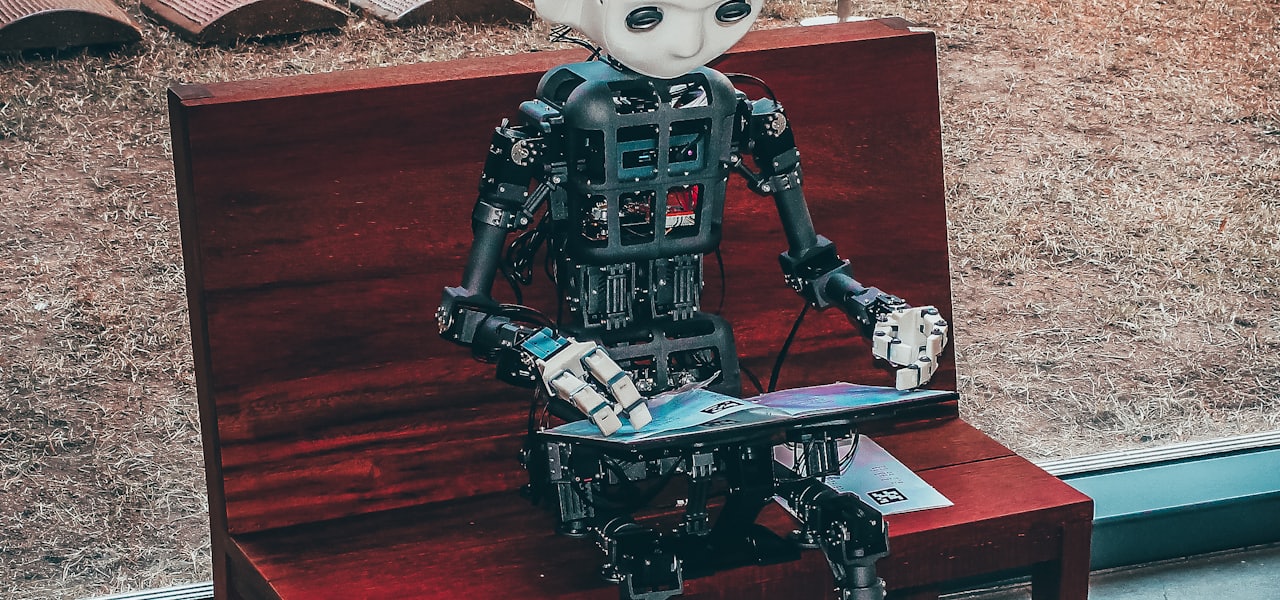
The first edition of the textbook Data Science and Predictive Analytics: Biomedical and Health Applications using R, authored by Ivo D. Dinov, was published in August 2018 by Springer. The second edition of the book was printed in 2023. This textbook covers some of the core mathematical foundations, computational techniques, and artificial intelligence approaches used in data science research and applications. By using the statistical computing platform R and a broad range of biomedical case-studies, the 23 chapters of the book first edition provide explicit examples of importing, exporting, processing, modeling, visualizing, and interpreting large, multivariate, incomplete, heterogeneous, longitudinal, and incomplete datasets (big data). == Structure == === First edition table of contents === The first edition of the Data Science and Predictive Analytics (DSPA) textbook is divided into the following 23 chapters, each progressively building on the previous content. === Second edition table of contents === The significantly reorganized revised edition of the book (2023) expands and modernizes the presented mathematical principles, computational methods, data science techniques, model-based machine learning and model-free artificial intelligence algorithms. The 14 chapters of the new edition start with an introduction and progressively build foundational skills to naturally reach biomedical applications of deep learning. Introduction Basic Visualization and Exploratory Data Analytics Linear Algebra, Matrix Computing, and Regression Modeling Linear and Nonlinear Dimensionality Reduction Supervised Classification Black Box Machine Learning Methods Qualitative Learning Methods—Text Mining, Natural Language Processing, and Apriori Association Rules Learning Unsupervised Clustering Model Performance Assessment, Validation, and Improvement Specialized Machine Learning Topics Variable Importance and Feature Selection Big Longitudinal Data Analysis Function Optimization Deep Learning, Neural Networks == Reception == The materials in the Data Science and Predictive Analytics (DSPA) textbook have been peer-reviewed in the Journal of the American Statistical Association, International Statistical Institute’s ISI Review Journal, and the Journal of the American Library Association. Many scholarly publications reference the DSPA textbook. As of January 17, 2021, the electronic version of the book first edition (ISBN 978-3-319-72347-1) is freely available on SpringerLink and has been downloaded over 6 million times. The textbook is globally available in print (hardcover and softcover) and electronic formats (PDF and EPub) in many college and university libraries and has been used for data science, computational statistics, and analytics classes at various institutions.
Timeline of artificial intelligence risks in global finance
The following article is a broad timeline of the course of events related to artificial intelligence risks in global finance. The AI boom has led to concerns including the existential risk from artificial intelligence, as the uptake on applications of artificial intelligence increases. By late 2025, global finance and artificial intelligence were "deeply intertwined". A June 2025 Menlo Ventures report raised concerns about the sustainability of future revenue and long-term profitability of AI, given the relatively low rate of consumer monetization. == 2017 == 30 NovemberThe New York Times said that new AI reports by McKinsey & Company, the National Bureau of Economic Research, and an AI Index created by university researchers, indicated an early AI boom. The Index built on a project—"The One Hundred Year Study on Artificial Intelligence" launched in 2014. == 2018 == 2018 was a year of incremental AI growth in finance. == 2022 == The release of ChatGPT by OpenAI became the catalyst for an artificial intelligence boom that continues to remake the global economy. According to a European Central Bank report, public interest in AI increased rapidly as evidenced with rising Google searches, AI jobs, models, patents, and innovations since late 2022. At that time Europe led the US in the size of its AI workforce. == 2023 == The regulatory body, the International Monetary Fund (IMF), published their report, "Generative Artificial Intelligence in Finance: Risk Considerations", drawing attention to oversight gaps and the need for regulations. The report explores the risks posed by using generative artificial intelligence (GenAI) systems in the financial sector including "broader risks to financial stability." == 2024 == January 12 In January 2024 Bloomberg's published its list of the "Magnificent Seven" Big Tech companies on the stock market based on their strength, size and market capitalization:Apple, Microsoft, Alphabet (Google), Amazon, Meta Platforms (Facebook), Nvidia, and Tesla. 21 June During the AI boom, Nvidia became the world's most valuable company, surpassing Microsoft, as its value increased to over US$4 trillion. In 2023 and 2024, the "Magnificent Seven" stocks were the primary drivers behind the increase in equity indexes, according to Reuters. == 2025 == === January === 23 January President Donald Trump's AI policy was announced calling for United States global leadership in artificial intelligence. The Economist noted that this politic shift in which the United States seeks "global dominance" in AI includes trimming regulations and assisting in expansion of infrastructure and increase in number of AI workers. Governments of Gulf nations were also investing trillions of dollars in AI. 27 January Against the backdrop of a tech war between China and the United States over AI dominance, within days of the launch of China's free DeepSeek App, it was the most downloaded app in the United States, rising to the first place in the Apple app store. President Trump responded immediately, saying this "sudden rise" should be a "wake-up" call to the United States, and called on US companies to be more competitive. === June === 26 June In their June 2025 report, Menlo Ventures estimated that only about 3% of consumers paid for artificial intelligence-related services, representing about $USD12 billion in annual spending. This is relatively low in contrast to the massive capital expenditure by AI infrastructure companies, which raises concerns about revenue sustainability and long-term profitability. === July === 23 July The Trump administration launched the US AI Action Plan, positioning the United States in a high-stakes technological race with China for global dominance in artificial intelligence, emphasizing that neither nation can afford to fall behind due to the exponential nature of AI advancement. The plan, a new government website and policy speech called for accelerated AI adoption across federal agencies, and a number of initiatives to make is easier for AI infrastructure expansion, and other measures to ensure American leadership in AI standards. Some leading experts warned that the administration failed to provide sufficient regulations and safeguards for AI safety. Concerns were raised about the negative impacts of cuts to research funding and tightened visa policies for scientists, potentially undermining public trust and America's ability to compete internationally. === September === 7 September The Economist cautioned that AI revenues are relatively modest compared to the high cost and investments in the creation of new data centers. Even Sam Altman, OpenAI CEO and one of the leading figures of the AI boom,, raised concerns about investors' outsized hopes for financial returns. At the same time, history has shown that new technologies, like railways and electricity, endured and spread after the initial hype faded. 12 September Economists warn that U.S. households' direct and indirect investments—mutual funds or retirement plans—in the stock market reached an unprecedented historically high level, now representing 45% of all financial assets, or about $USD51.2 trillion. Compared to the Dot-com bubble this represents a sharp increase in exposure. This makes U.S. households vulnerable to market downturns which in turn would result in decreasing consumer spending. U.S. household net worth rose to a record $176.3 trillion in the second quarter, an increase of $7.3 trillion since early 2025 and about $46 trillion higher than before the pandemic. Federal Reserve data attribute the surge primarily to gains in stock markets and housing values. However, the rise in wealth on paper coincided with increased household borrowing and growing government debt. 18 September Questions were being raised about how quickly the data centers, chips, servers, and GPUs assets of major AI companies will depreciate in value. Comparisons have been made to the Railway Mania in the aftermath of the stock market bubble where a valuable physical infrastructure remained standing, and the telecoms crash after the dot-com bubble which left fiber networks. 28 September There were warnings that record-high American stock ownership during the AI-fueled market boom is a red flag for systemic risk, as the current concentration in equities exceeds levels seen before the dot-com bubble burst in 2000, and could amplify the impact of any future stock market correction. === October === 3 October In 2025 alone, venture capitalists invested almost $USD200 billion in the artificial intelligence sector. 29 October Nvidia was the first company in the world to be valued at US$5 trillion, largely due to AI demand and strategic partnerships with leading technology and AI firms. Nvidia's increase in value was "meteoric". === November === 2 November Forbes reported that, since April, the 'Magnificent Seven' tech giants together contributed over 40% of the S&P 500's return, highlighting their outsized influence and the growing impact of AI on market valuations. CNN warned that while there is a current benefit to investors, with such a high concentration in the S&P 500, they are highly exposed to the fate of the Mag Seven. 2 November Globally there are 11,000 datacentres—huge campuses for AI infrastructure, including thousands of chips, GPUS, and servers. This represents a 500% increase over the last two decades. It is anticipated that $3USDtn more will be spent on increasing that number over the next two or three years. 5 November Concerns about the potential for a market bubble were raised as six of the AI-related Big Tech "Magnificent Seven"—that contribute to the AI boom—reported losing ground in the stock market. Global markets and artificial intelligence have become "deeply intertwined", according to a Reuters report. As of November 2025, more than 50% of the 20 largest S&P firms were deeply exposed to AI. In contrast, in 2000, the 20 S&P 500 firms represented 39% of its total value only 11 of these companies were exposed to the internet. If AI fails to deliver strong returns on their investments, these top S&P firms would be significantly impacted, according to the Economist. Analysts suggest that the AI market in 2025 may not behave like a traditional one, as investors are simultaneously aware of the risks and driven by the potential for outsized rewards. Leading AI labs may believe that the first company to achieve artificial general intelligence (AGI), when an AI system surpasses all human cognitive abilities and becomes capable of self-improvement—could dominate the future of technology and finance. While some have estimated that the potential value of such a breakthrough could be as high as $1.46 quadrillion, this figure is speculative and widely debated. 5 November Bloomberg described Nvidia's H100 Hopper-Blackwell AI chips as the "King of AI chips". Nvidia dominates the AI chip market with over 78% of the market share because of both speed and cost. According to B
Digital artifact
Digital artifact in information science, is any undesired or unintended alteration in data introduced in a digital process by an involved technique and/or technology. Digital artifact can be of any content types including text, audio, video, image, animation or a combination. == Information science == In information science, digital artifacts result from: Hardware malfunction: In computer graphics, visual artifacts may be generated whenever a hardware component such as the processor, memory chip, cabling malfunctions, etc., corrupts data. Examples of malfunctions include physical damage, overheating, insufficient voltage and GPU overclocking. Common types of hardware artifacts are texture corruption and T-vertices in 3D graphics, and pixelization in MPEG compressed video. Software malfunction: Artifacts may be caused by algorithm flaws such as decoding/encoding audio or video, or a poor pseudo-random number generator that would introduce artifacts distinguishable from the desired noise into statistical models. Compression: Controlled amounts of unwanted information may be generated as a result of the use of lossy compression techniques. One example is the artifacts seen in JPEG and MPEG compression algorithms that produce compression artifacts. Quantization: Digital imprecision generated in the process of converting analog information into digital space, is due to the limited granularity of digital numbering space. In computer graphics, quantization is seen as pixelation. Aliasing: As a consequence of sampling or sample-rate conversion, energy from frequencies outside of the signal frequency band of interest are folded across multiples of the Nyquist frequency. This is typically mitigated by using an anti-aliasing filter. Filtering: The process of filtering a signal, such as using an anti-aliasing filter, causes undesired alterations to the signal due to imperfections in the frequency response magnitude and phase, and due to the time domain impulse response. Rolling shutter, the line scanning of an object that is moving too fast for the image sensor to capture a unitary image. Error diffusion: poorly-weighted kernel coefficients result in undesirable visual artifacts.
Car–Parrinello molecular dynamics
Car–Parrinello molecular dynamics (CPMD) refers to either a method used in molecular dynamics (also known as the Car–Parrinello method) or the computational chemistry software package used to implement this method. The CPMD method is one of the major methods for calculating ab initio molecular dynamics (ab initio MD or AIMD). Ab initio molecular dynamics (AIMD) is a computational method that uses first principles through quantum mechanics to simulate the motion of atoms in a system. It is a type of molecular dynamics (MD) simulation that does not rely on empirical potentials or force fields to describe the interactions between atoms, but rather calculates these interactions entirely from the electronic structure of the system using quantum mechanics. In an ab initio MD simulation, the total energy of the system is calculated at each time step using density functional theory (DFT), Hartree-Fock (HF), or other electronic structure calculation methods. The forces acting on each atom are then determined from the gradient of the energy with respect to the atomic coordinates, and the equations of motion are solved to predict the trajectory of the atoms. AIMD permits chemical bond breaking and forming events to occur and accounts for electronic polarization effect. Therefore, Ab initio MD simulations can be used to study a wide range of phenomena, including the structural, thermodynamic, and dynamic properties of materials and chemical reactions. They are particularly useful for systems that are not well described by empirical potentials or force fields, such as systems with strong electronic correlation or systems with many degrees of freedom. However, ab initio MD simulations are computationally demanding and require significant computational resources. The CPMD method is related to the more common Born–Oppenheimer molecular dynamics (BOMD) method in that the quantum mechanical effect of the electrons is included in the calculation of energy and forces for the classical motion of the nuclei. CPMD and BOMD are different types of AIMD. However, whereas BOMD treats the electronic structure problem within the time-independent Schrödinger equation, CPMD explicitly includes the electrons as active degrees of freedom, via (fictitious) dynamical variables. The software is a parallelized plane wave / pseudopotential implementation of density functional theory, particularly designed for ab initio molecular dynamics. == Car–Parrinello method == The Car–Parrinello method is a type of molecular dynamics, usually employing periodic boundary conditions, planewave basis sets, and density functional theory, proposed by Roberto Car and Michele Parrinello in 1985 while working at SISSA, who were subsequently awarded the Dirac Medal by ICTP in 2009. In contrast to Born–Oppenheimer molecular dynamics wherein the nuclear (ions) degree of freedom are propagated using ionic forces which are calculated at each iteration by approximately solving the electronic problem with conventional matrix diagonalization methods, the Car–Parrinello method explicitly introduces the electronic degrees of freedom as (fictitious) dynamical variables, writing an extended Lagrangian for the system which leads to a system of coupled equations of motion for both ions and electrons. In this way, an explicit electronic minimization at each time step, as done in Born–Oppenheimer MD, is not needed: after an initial standard electronic minimization, the fictitious dynamics of the electrons keeps them on the electronic ground state corresponding to each new ionic configuration visited along the dynamics, thus yielding accurate ionic forces. In order to maintain this adiabaticity condition, it is necessary that the fictitious mass of the electrons is chosen small enough to avoid a significant energy transfer from the ionic to the electronic degrees of freedom. This small fictitious mass in turn requires that the equations of motion are integrated using a smaller time step than the one (1–10 fs) commonly used in Born–Oppenheimer molecular dynamics. Currently, the CPMD method can be applied to systems that consist of a few tens or hundreds of atoms and access timescales on the order of tens of picoseconds. == General approach == In CPMD the core electrons are usually described by a pseudopotential and the wavefunction of the valence electrons are approximated by a plane wave basis set. The ground state electronic density (for fixed nuclei) is calculated self-consistently, usually using the density functional theory method. Kohn-Sham equations are often used to calculate the electronic structure, where electronic orbitals are expanded in a plane-wave basis set. Then, using that density, forces on the nuclei can be computed, to update the trajectories (using, e.g. the Verlet integration algorithm). In addition, however, the coefficients used to obtain the electronic orbital functions can be treated as a set of extra spatial dimensions, and trajectories for the orbitals can be calculated in this context. == Fictitious dynamics == CPMD is an approximation of the Born–Oppenheimer MD (BOMD) method. In BOMD, the electrons' wave function must be minimized via matrix diagonalization at every step in the trajectory. CPMD uses fictitious dynamics to keep the electrons close to the ground state, preventing the need for a costly self-consistent iterative minimization at each time step. The fictitious dynamics relies on the use of a fictitious electron mass (usually in the range of 400 – 800 a.u.) to ensure that there is very little energy transfer from nuclei to electrons, i.e. to ensure adiabaticity. Any increase in the fictitious electron mass resulting in energy transfer would cause the system to leave the ground-state BOMD surface. === Lagrangian === L = 1 2 ( ∑ I n u c l e i M I R ˙ I 2 + μ ∑ i o r b i t a l s ∫ d r | ψ ˙ i ( r , t ) | 2 ) − E [ { ψ i } , { R I } ] + ∑ i j Λ i j ( ∫ d r ψ i ψ j − δ i j ) , {\displaystyle {\mathcal {L}}={\frac {1}{2}}\left(\sum _{I}^{\mathrm {nuclei} }\ M_{I}{\dot {\mathbf {R} }}_{I}^{2}+\mu \sum _{i}^{\mathrm {orbitals} }\int d\mathbf {r} \ |{\dot {\psi }}_{i}(\mathbf {r} ,t)|^{2}\right)-E\left[\{\psi _{i}\},\{\mathbf {R} _{I}\}\right]+\sum _{ij}\Lambda _{ij}\left(\int d\mathbf {r} \ \psi _{i}\psi _{j}-\delta _{ij}\right),} where μ {\displaystyle \mu } is the fictitious mass parameter; E[{ψi},{RI}] is the Kohn–Sham energy density functional, which outputs energy values when given Kohn–Sham orbitals and nuclear positions. === Orthogonality constraint === ∫ d r ψ i ∗ ( r , t ) ψ j ( r , t ) = δ i j , {\displaystyle \int d\mathbf {r} \ \psi _{i}^{}(\mathbf {r} ,t)\psi _{j}(\mathbf {r} ,t)=\delta _{ij},} where δij is the Kronecker delta. === Equations of motion === The equations of motion are obtained by finding the stationary point of the Lagrangian under variations of ψi and RI, with the orthogonality constraint. M I R ¨ I = − ∇ I E [ { ψ i } , { R I } ] {\displaystyle M_{I}{\ddot {\mathbf {R} }}_{I}=-\nabla _{I}\,E\left[\{\psi _{i}\},\{\mathbf {R} _{I}\}\right]} μ ψ ¨ i ( r , t ) = − δ E δ ψ i ∗ ( r , t ) + ∑ j Λ i j ψ j ( r , t ) , {\displaystyle \mu {\ddot {\psi }}_{i}(\mathbf {r} ,t)=-{\frac {\delta E}{\delta \psi _{i}^{}(\mathbf {r} ,t)}}+\sum _{j}\Lambda _{ij}\psi _{j}(\mathbf {r} ,t),} where Λij is a Lagrangian multiplier matrix to comply with the orthonormality constraint. === Born–Oppenheimer limit === In the formal limit where μ → 0, the equations of motion approach Born–Oppenheimer molecular dynamics. == Software packages == There are a number of software packages available for performing AIMD simulations. Some of the most widely used packages include: CP2K: an open-source software package for AIMD. Quantum Espresso: an open-source package for performing DFT calculations. It includes a module for AIMD. VASP: a commercial software package for performing DFT calculations. It includes a module for AIMD. Gaussian: a commercial software package that can perform AIMD. NWChem: an open-source software package for AIMD. LAMMPS: an open-source software package for performing classical and ab initio MD simulations. SIESTA: an open-source software package for AIMD. ORCA: a general-purpose quantum chemistry package. == Applications == Studying the behavior of water across different environments, such as near a hydrophobic graphene sheet. Investigating the structure and dynamics of liquid water at ambient temperature. Solving the heat transfer problems (heat conduction and thermal radiation), such as in Si/Ge superlattices. Probing the proton transfer along hydrogen-bonds in different environments, such as in 1D water chains inside carbon nanotubes. Evaluating the critical point of crystals, composites, and solid-state materials, such as aluminum. Predicting and modelling different phases and phase transitions, such as in the amorphous phase of the phase-change memory material GeSbTe. Studying the combustion of combustibles, such as lignite-water systems. Measuring th
Conceptions of Library and Information Science
Conceptions of Library and Information Science (CoLIS) is a series of conferences about historical, empirical and theoretical perspectives in Library and Information Science. == CoLIS conferences == CoLIS 1 1991 in Tampere, Finland CoLIS 2 1996 in Copenhagen, Denmark CoLIS 3 1999 in Dubrovnik, Croatia CoLIS 4 2002 in Seattle, US CoLIS 5 2005 in Glasgow, Scotland CoLIS 6 2007 in Borås, Sweden CoLIS 7 June 2010 in London, at City University London. CoLIS 8 August 19–22, 2013, in Copenhagen, Denmark, at The Royal School of Library and Information Science. CoLIS 9 June 27–29, 2016, in Uppsala, Sweden, at Uppsala University. CoLIS 10 June 16–19, 2019, in Ljubljana, Slovenia, Faculty of Arts CoLIS 11 May 29–June 1, 2022, in Oslo, Norway, Oslo Metropolitan University.
C-RAN
C-RAN (Cloud-RAN), also referred to as Centralized-RAN, is an architecture for cellular networks. C-RAN is a centralized, cloud computing-based architecture for radio access networks that supports 2G, 3G, 4G, 5G and future wireless communication standards. Its name comes from the four 'C's in the main characteristics of C-RAN system, "Clean, Centralized processing, Collaborative radio, and a real-time Cloud Radio Access Network". == Background == Traditional cellular, or Radio Access Networks (RAN), consist of many stand-alone base stations (BTS). Each BTS covers a small area, whereas a group BTS provides coverage over a continuous area. Each BTS processes and transmits its own signal to and from the mobile terminal, and forwards the data payload to and from the mobile terminal and out to the core network via the backhaul. Each BTS has its own cooling, back haul transportation, backup battery, monitoring system, and so on. Because of limited spectral resources, network operators 'reuse' the frequency among different base stations, which can cause interference between neighboring cells. There are several limitations in the traditional cellular architecture. First, each BTS is costly to build and operate. Moore's law helps reduce the size and power of an electrical system, but the supporting facilities of the BTS are not improved quite as well. Second, when more BTS are added to a system to improve its capacity, interference among BTS is more severe as BTS are closer to each other and more of them are using the same frequency. Third, because users are mobile, the traffic of each BTS fluctuates (called 'tide effect'), and as a result, the average utilization rate of individual BTS is pretty low. However, these processing resources cannot be shared with other BTS. Therefore, all BTS are designed to handle the maximum traffic, not average traffic, resulting in a waste of processing resources and power at idle times. == Evolution of base station architecture == === All-in-one macro base station === In the 1G and 2G cellular networks, base stations had an all-in-one architecture. Analog, digital, and power functions were housed in a single cabinet as large as a refrigerator. Usually the base station cabinet was placed in a dedicated room along with all necessary supporting facilitates such as power, backup battery, air conditioning, environment surveillance, and backhaul transmission equipment. The RF signal is generated by the base station RF unit and propagates through pairs of RF cables up to the antennas on the top of a base station tower or other mounting points. This all-in-one architecture was mostly found in macro cell deployments. === Distributed base station === For 3G, a distributed base station architecture was introduced by Ericsson, Nokia, Huawei, and other leading telecom equipment vendors. In this architecture the radio function unit, also known as the remote radio head (RRH), is separated from the digital function unit, or baseband unit (BBU) by fiber. Digital baseband signals are carried over fiber, using the Open Base Station Architecture Initiative (OBSAI) or Common Public Radio Interface (CPRI) standard. The RRH can be installed on the top of tower close to the antenna, reducing the loss compared to the traditional base station where the RF signal has to travel through a long cable from the base station cabinet to the antenna at the top of the tower. The fiber link between RRH and BBU also allows more flexibility in network planning and deployment as they can be placed a few hundred meters or a few kilometers away. Most modern base stations now use this decoupled architecture. === C-RAN/Cloud-RAN === C-RAN may be viewed as an architectural evolution of the above distributed base station system. It takes advantage of many technological advances in wireless, optical and IT communications systems. For example, it uses the latest CPRI standard, low cost Coarse or Dense Wavelength Division Multiplexing (CWDM/ DWDM) technology, and mmWave to allow transmission of baseband signal over long distance thus achieving large scale centralised base station deployment. It applies recent Data Centre Network technology to allow a low cost, high reliability, low latency and high bandwidth interconnect network in the BBU pool. It utilizes open platforms and real-time virtualization technology rooted in cloud computing to achieve dynamic shared resource allocation and support multi-vendor, multi-technology environments. == Architecture overview == C-RAN architecture has the following characteristics that are distinct from other cellular architectures: Large scale centralized deployment: Allows many RRHs to connect to a centralized BBU pool. The maximum distance can be 20km in fiber link for 4G (LTE/LTE-A) systems, and even longer distances (40~80km) for 3G (WCDMA/TD-SCDMA) and 2G (GSM/CDMA) systems. Native support to Collaborative Radio technologies: Any BBU can talk with any other BBU within the BBU pool with very high bandwidth (10 Gbit/s and above) and low latency (10 μs level). This is enabled by the interconnection of BBUs in the pool. This is one major difference from BBU Hotelling, or base station Hotelling; in the latter case, the BBUs of different base stations are simply stacked together and have no direct link between them to allow physical layer co-ordination. Real-time virtualization capability based on open platform: This is different from traditional base stations built on proprietary hardware, where the software and hardware are close-sourced and provided by single vendors. In contrast, a C-RAN BBU pool is built on open hardware, like x86/ARM CPU based servers, and interface cards that handle fiber links to RRHs and inter-connections in the pool. Real-time virtualization ensures that resources in the pool can be allocated dynamically to base station software stacks, say 4G/3G/2G function modules from different vendors, according to network load. However, to satisfy the strict timing requirements of wireless communication systems, the real-time performance for C-RAN is at the level of tens of microseconds, which is two orders of magnitude better than the millisecond level 'real-time' performance usually seen in Cloud Computing environments. == Similar architecture and systems == KT, a telecom operator in the Republic of Korea, introduced a Cloud Computing Center (CCC) system in their 3G (WCDMA/HSPA) and 4G (LTE/LTE-A) network in 2011 and 2012. The concept of CCC is basically the same as C-RAN. SK Telecom has also deployed Smart Cloud Access Network (SCAN) and Advanced-SCAN in their 4G (LTE/LTE-A) network in Korea no later than 2012. In 2014, Airvana (now CommScope) introduced OneCell, a C-RAN-based small cell system designed for enterprises and public spaces. == Competing architectures in cellular network evolution == === All-in-one BTS === One major alternative solution that is addressing similar challenges of RAN, is the small size, all-in-one outdoor BTS. Thanks to the achievements in the semiconductor industry, all the functionality of a BTS, including RF, baseband processing, MAC processing and package level processing, can now be implemented in a volume of <50 liters. This makes the system small and weatherproof, reduces the difficulty of BTS site choice and construction, eliminates the air conditioning requirement, and thus reduces operational costs. However, because each BTS is still working on its own, it cannot readily make use of the collaboration algorithms to reduce the interference between neighboring BTSs. It is also relatively hard to upgrade or repair because the all-in-one BTS units are usually mounted near the antenna. More processing units in less-protected environments also implies a higher failure rate compared to C-RAN, which only has the RRU deployed outdoors. The advantage of Cloud RAN lies in its ability to implement LTE-Advanced features such as Coordinated MultiPoint (CoMP) with very low latency between multiple radio heads. However, the economic benefit of improvements such as CoMP can be negated by the higher backhaul costs for some operators. === Small cell === The main competition between small cell and C-RAN occurs in two deployment scenarios: outdoor hotspot coverage and indoor coverage. == Academic research and publications == As one of the promising evolution paths for future cellular network architecture, C-RAN has attracted high academic research interest. Meanwhile, because the native support of cooperative radio capability built into the C-RAN architecture, it also enables many advanced algorithms that were hard to implement in cellular networks, including Cooperative Multi-Point Transmission/Receiving, Network Coding, etc. In October 2011, Wireless World Research Forum 27 was hosted in Germany, when China Mobile was invited to give a C-RAN presentation. In August 2012, IEEE C-RAN 2012 workshop was hosted in Kunming, China. CRC Press published a book, "Green Communications: Theore
Explore-then-commit algorithm
Explore Then Commit (ETC) is an algorithm for the multi-armed bandit problem foc,used on finding the best trade-off between exploration and exploitation. == Multi-armed bandit problem == The multi-armed bandit problem is a sequential game where one player has to choose at each turn between K {\displaystyle K} actions (arms). Behind every arm a {\displaystyle a} is an unknown distribution ν a {\displaystyle \nu _{a}} that lies in a set D {\displaystyle {\mathcal {D}}} known by the player (for example, D {\displaystyle {\mathcal {D}}} can be the set of Gaussian distributions or Bernoulli distributions). At each turn t {\displaystyle t} the player chooses (pulls) an arm a t {\displaystyle a_{t}} , they then get an observation X t {\displaystyle X_{t}} of the distribution ν a t {\displaystyle \nu _{a_{t}}} . === Regret minimization === The goal is to minimize the regret at time T {\displaystyle T} that is defined as R T := ∑ a = 1 K Δ a E [ N a ( T ) ] {\displaystyle R_{T}:=\sum _{a=1}^{K}\Delta _{a}\mathbb {E} [N_{a}(T)]} where μ a := E [ ν a ] {\displaystyle \mu _{a}:=\mathbb {E} [\nu _{a}]} is the mean of arm a {\displaystyle a} μ ∗ := max a μ a {\displaystyle \mu ^{}:=\max _{a}\mu _{a}} is the highest mean Δ a := μ ∗ − μ a {\displaystyle \Delta _{a}:=\mu ^{}-\mu _{a}} N a ( t ) {\displaystyle N_{a}(t)} is the number of pulls of arm a {\displaystyle a} up to turn t {\displaystyle t} The player has to find an algorithm that chooses at each turn t {\displaystyle t} which arm to pull based on the previous actions and observations ( a s , X s ) s < t {\displaystyle (a_{s},X_{s})_{s