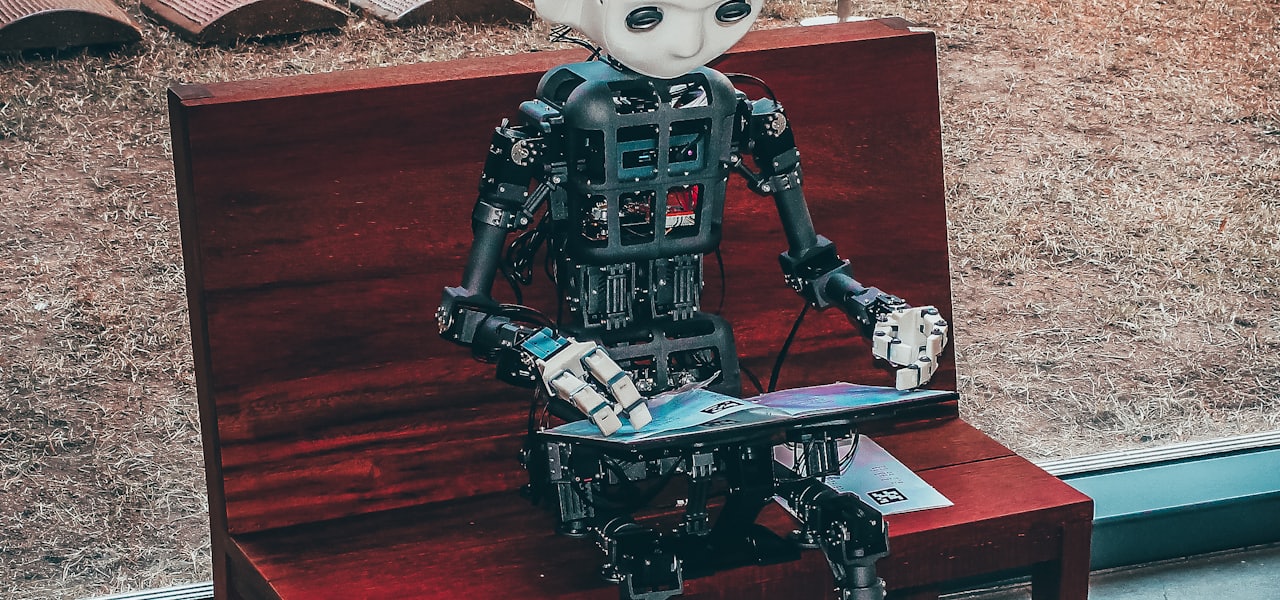
Wumpus world is a simple world use in artificial intelligence for which to represent knowledge and to reason. Wumpus world was introduced by Michael Genesereth, and is discussed in the Russell-Norvig Artificial Intelligence book Artificial Intelligence: A Modern Approach. Wumpus World is loosely inspired by the 1972 video game Hunt the Wumpus. == Problem description == In Artificial Intelligence: A Modern Approach, the wumpus world features a 4x4 grid, containing a monster called a wumpus, multiple bottomless pits and hidden gold. The agent starts at (1,1) and has to find the gold and return to the starting position. The agent loses 1 point for every move and gains 1000 points for bringing the gold to the starting position. The agent can sense pits by a breeze, stench indicates a wumpus, and sparkle indicates gold. The wumpus can be killed by an arrow but costs 10 points.
Data event
A data event is a relevant state transition defined in an event schema. Typically, event schemata are described by pre- and post condition for a single or a set of data items. In contrast to ECA (Event condition action), which considers an event to be a signal, the data event not only refers to the change (signal), but describes specific state transitions, which are referred to in ECA as conditions. Considering data events as relevant data item state transitions allows defining complex event-reaction schemata for a database. Defining data event schemata for relational databases is limited to attribute and instance events. Object-oriented databases also support collection properties, which allows defining changes in collections as data events, too.
Corinna Cortes
Corinna Cortes (born 31 March 1961) is a Danish computer scientist known for her contributions to machine learning. She is a Vice President at Google Research in New York City. Cortes is an ACM Fellow and a recipient of the Paris Kanellakis Award for her work on theoretical foundations of support vector machines. == Early life and education == Corinna Cortes was born in 1961 in Denmark. Cortes received her Master of Science degree in physics from University of Copenhagen in 1989. She received her PhD in computer science from the University of Rochester in 1993 for research supervised by Randal C. Nelson. == Career and research == Cortes joined AT&T Bell Labs as a researcher in 1993. Since 2003, she has served as Vice President of Google Research, New York City, and since 2011, as adjunct professor at the UCPH Department of Computer Science. She is serves as an editorial board member of the journal Machine Learning. Cortes' research covers a wide range of topics in machine learning, including support vector machines (SVM) and data mining. SVM is one of the most frequently used algorithms in machine learning, which is used in many practical applications, including medical diagnosis and weather forecasting. At AT&T, Cortes was a contributor to the design of Hancock programming language. === Awards and honours === In 2008, she jointly with Vladimir Vapnik received the Paris Kanellakis Award for the development of a highly effective algorithm for supervised learning known as support vector machines (SVM). She was named an ACM Fellow in 2023 for theoretical and practical contributions to machine learning, industrial leadership and service to the field. == Personal life == Corinna has two children and is also a competitive runner.
How to Choose an AI Sales Assistant
In search of the best AI sales assistant? An AI sales assistant is software that uses machine learning to help you get more done — it turns a rough idea into a polished result in seconds. When choosing one, weigh output quality, pricing, export formats, and how well it fits the tools you already use. Whether you are a beginner or a pro, the right AI sales assistant slots into your workflow and pays for itself fast. Below we compare features, pricing, and real output so you can choose with confidence.
Co-occurrence
In linguistics, co-occurrence or cooccurrence (in older texts often shown with diacritic as coöccurrence) is an above-chance frequency of ordered occurrence of two adjacent terms in a text corpus. Co-occurrence in this linguistic sense can be interpreted as an indicator of semantic proximity or an idiomatic expression. Corpus linguistics and its statistical analyses can reveal (regularity of) patterns of co-occurrences within a language and enable the working out of typical collocations for its lexical items. A co-occurrence restriction is identified when linguistic elements never occur together. Analysis of these restrictions can lead to discoveries about the structure and development of a language. Co-occurrence can be seen an extension of word counting in higher dimensions. Co-occurrence can be quantitatively described using measures like a massive correlation or mutual information. Co-occurrence information and knowledge of co-occurring words may be relevant in analysis of language for the purposes of large language models, part of the emerging field of artificial intelligence, and helpful in word games such as scrabble.
Contract management software
Contract management software constitutes software and associated data management used to support contract management, contract lifecycle management, and contractor management on projects in the procurement of goods and services. It may be used together with project management software. == History == Historically, contract management was seen as a "paper-intensive" process. Early steps from the early 2000's reported by the Aberdeen Group required extensive data conversion work to enable documents to be handled electronically. With the adoption of the European Union's General Data Protection Regulation (GDPR) in 2016, companies needed to take additional steps in regards to contract management. Each data responsible entity was obliged to sign data processing agreements (DPAs) with the various vendors, who treat personal data on behalf of the data responsible. DPAs need to be regularly controlled, adjusted and renewed, which adds an extra agreement to such vendors or at least an extra DPA addendum to each agreement. By 2018, Ardent Partner's research had found that software used for automating contract management activities was being more extensively used among major companies or businesses with "Best-in-Class" procurement teams. Contract management process automation was found to be closely linked with more effective internal business collaboration, standardization and risk management. == Advantages and key functions == Using contract management software can have multiple benefits compared to manually managing paper contracts. This software can help keep track of multiple activities and can have features for automating administration, ensuring compliance, monitoring risk, running reports and triggering alerts. In addition to these types of features, contract management software systems provide a centralized repository for employees to quickly access all contracts worldwide in one place. Contract management software is produced by many companies, working on a range of scales and offering varying degrees of customizability. Basic functions should include the ability to store contract documents, track changes to contract documents, search documents for a particular criterion, send key date alerts and to report required aspects of the contract. Other functions include managing a new contract request, capturing related data, following a document through a review and approval process, and collecting digital signatures. Contract management software may also be an aid to project portfolio management and spend analysis, and may also monitor KPIs. Leading contract management software provides contract visibility, monitoring, and compliance to automate and streamline the contract lifecycle process. Contract management software which uses artificial intelligence (AI) can identify contract types based on pattern recognition. AI contracting software trains its algorithms on a set of contract data to recognize patterns and extract variables such as clauses, dates, and parties. It also offers simple prediction capabilities, by sorting through a large volume of contracts and flagging individual contracts based on specified criteria. AI software can also read contracts in multiple formats and languages, extract contract data, and provide analytics. It can reduce the risk of human error in contract drafting and review. A centralized repository provides a critical advantage allowing for all contract documents to be stored within one location. Having contracts stored in multiple locations can delay and interrupt the contracting process. == Contract risk management software (CRMS) for capital projects == Very large enterprises, such as capital expenditure (capex) projects, involve multiple parties and high risk and uncertainty. They are unlike traditional operating contracts in that they are subject to shared deadlines in unique situations. As the complexity of these unique projects increases, the relationships between parties become more important. This requires contract management software, or contract risk management software (CRMS), to become more dynamic and responsive. The terms of these capex contracts necessarily involve assumptions at the start of the process and are likely to change over the lifetime of the project lifecycle. For this reason, CRMS must be capable of recording one single instance of agreed changes to contract terms and incorporating these changes in an auditable and legally robust way. With multiple decision makers involved, CRMS should also make accountability more transparent and enable faster decisions about variation proposals.
Finite-state transducer
A finite-state transducer (FST) is a finite-state machine with two memory tapes, following the terminology for Turing machines: an input tape and an output tape. This contrasts with an ordinary finite-state automaton, which has a single tape. An FST is a type of finite-state automaton (FSA) that maps between two sets of symbols. An FST is more general than an FSA. An FSA defines a formal language by defining a set of accepted strings, while an FST defines a relation between sets of strings. An FST will read a set of strings on the input tape and generate a set of relations on the output tape. An FST can be thought of as a translator or relater between strings in a set. In morphological parsing, an example would be inputting a string of letters into the FST, the FST would then output a string of morphemes. == Overview == An automaton can be said to recognize a string if we view the content of its tape as input. In other words, the automaton computes a function that maps strings into the set {0,1}. Alternatively, we can say that an automaton generates strings, which means viewing its tape as an output tape. On this view, the automaton generates a formal language, which is a set of strings. The two views of automata are equivalent: the function that the automaton computes is precisely the indicator function of the set of strings it generates. The class of languages generated by finite automata is known as the class of regular languages. The two tapes of a transducer are typically viewed as an input tape and an output tape. On this view, a transducer is said to transduce (i.e., translate) the contents of its input tape to its output tape, by accepting a string on its input tape and generating another string on its output tape. It may do so nondeterministically and it may produce more than one output for each input string. A transducer may also produce no output for a given input string, in which case it is said to reject the input. In general, a transducer computes a relation between two formal languages. Each string-to-string finite-state transducer relates the input alphabet Σ to the output alphabet Γ. Relations R on Σ×Γ that can be implemented as finite-state transducers are called rational relations. Rational relations that are partial functions, i.e. that relate every input string from Σ to at most one Γ, are called rational functions. Finite-state transducers are often used for phonological and morphological analysis in natural language processing research and applications. Pioneers in this field include Ronald Kaplan, Lauri Karttunen, Martin Kay and Kimmo Koskenniemi. A common way of using transducers is in a so-called "cascade", where transducers for various operations are combined into a single transducer by repeated application of the composition operator (defined below). == Formal construction == Formally, a finite transducer T is a 6-tuple (Q, Σ, Γ, I, F, δ) such that: Q is a finite set, the set of states; Σ is a finite set, called the input alphabet; Γ is a finite set, called the output alphabet; I is a subset of Q, the set of initial states; F is a subset of Q, the set of final states; and δ ⊆ Q × ( Σ ∪ { ϵ } ) × ( Γ ∪ { ϵ } ) × Q {\displaystyle \delta \subseteq Q\times (\Sigma \cup \{\epsilon \})\times (\Gamma \cup \{\epsilon \})\times Q} (where ε is the empty string) is the transition relation. We can view (Q, δ) as a labeled directed graph, known as the transition graph of T: the set of vertices is Q, and ( q , a , b , r ) ∈ δ {\displaystyle (q,a,b,r)\in \delta } means that there is a labeled edge going from vertex q to vertex r. We also say that a is the input label and b the output label of that edge. NOTE: This definition of finite transducer is also called letter transducer (Roche and Schabes 1997); alternative definitions are possible, but can all be converted into transducers following this one. Define the extended transition relation δ ∗ {\displaystyle \delta ^{}} as the smallest set such that: δ ⊆ δ ∗ {\displaystyle \delta \subseteq \delta ^{}} ; ( q , ϵ , ϵ , q ) ∈ δ ∗ {\displaystyle (q,\epsilon ,\epsilon ,q)\in \delta ^{}} for all q ∈ Q {\displaystyle q\in Q} ; and whenever ( q , x , y , r ) ∈ δ ∗ {\displaystyle (q,x,y,r)\in \delta ^{}} and ( r , a , b , s ) ∈ δ {\displaystyle (r,a,b,s)\in \delta } then ( q , x a , y b , s ) ∈ δ ∗ {\displaystyle (q,xa,yb,s)\in \delta ^{}} . The extended transition relation is essentially the reflexive transitive closure of the transition graph that has been augmented to take edge labels into account. The elements of δ ∗ {\displaystyle \delta ^{}} are known as paths. The edge labels of a path are obtained by concatenating the edge labels of its constituent transitions in order. The behavior of the transducer T is the rational relation [T] defined as follows: x [ T ] y {\displaystyle x[T]y} if and only if there exists i ∈ I {\displaystyle i\in I} and f ∈ F {\displaystyle f\in F} such that ( i , x , y , f ) ∈ δ ∗ {\displaystyle (i,x,y,f)\in \delta ^{}} . This is to say that T transduces a string x ∈ Σ ∗ {\displaystyle x\in \Sigma ^{}} into a string y ∈ Γ ∗ {\displaystyle y\in \Gamma ^{}} if there exists a path from an initial state to a final state whose input label is x and whose output label is y. === Weighted automata === Finite State Transducers can be weighted, where each transition is labelled with a weight in addition to the input and output labels. A Weighted Finite State Transducer (WFST) over a set K of weights can be defined similarly to an unweighted one as an 8-tuple T=(Q, Σ, Γ, I, F, E, λ, ρ), where: Q, Σ, Γ, I, F are defined as above; E ⊆ Q × ( Σ ∪ { ϵ } ) × ( Γ ∪ { ϵ } ) × Q × K {\displaystyle E\subseteq Q\times (\Sigma \cup \{\epsilon \})\times (\Gamma \cup \{\epsilon \})\times Q\times K} (where ε is the empty string) is the finite set of transitions; λ : I → K {\displaystyle \lambda :I\rightarrow K} maps initial states to weights; ρ : F → K {\displaystyle \rho :F\rightarrow K} maps final states to weights. In order to make certain operations on WFSTs well-defined, it is convenient to require the set of weights to form a semiring. Two typical semirings used in practice are the log semiring and tropical semiring: nondeterministic automata may be regarded as having weights in the Boolean semiring. Two weighted FST can be composed. == Operations on finite-state transducers == The following operations defined on finite automata also apply to finite transducers: Union. Given transducers T and S, there exists a transducer T ∪ S {\displaystyle T\cup S} such that x [ T ∪ S ] y {\displaystyle x[T\cup S]y} if and only if x [ T ] y {\displaystyle x[T]y} or x [ S ] y {\displaystyle x[S]y} . Concatenation. Given transducers T and S, there exists a transducer T ⋅ S {\displaystyle T\cdot S} such that x [ T ⋅ S ] y {\displaystyle x[T\cdot S]y} if and only if there exist x 1 , x 2 , y 1 , y 2 {\displaystyle x_{1},x_{2},y_{1},y_{2}} with x = x 1 x 2 , y = y 1 y 2 , x 1 [ T ] y 1 {\displaystyle x=x_{1}x_{2},y=y_{1}y_{2},x_{1}[T]y_{1}} and x 2 [ S ] y 2 . {\displaystyle x_{2}[S]y_{2}.} Kleene closure. Given a transducer T, there might exist a transducer T ∗ {\displaystyle T^{}} with the following properties: and x [ T ∗ ] y {\displaystyle x[T^{}]y} does not hold unless mandated by (k1) or (k2). Composition. Given a transducer T on alphabets Σ and Γ and a transducer S on alphabets Γ and Δ, there exists a transducer T ∘ S {\displaystyle T\circ S} on Σ and Δ such that x [ T ∘ S ] z {\displaystyle x[T\circ S]z} if and only if there exists a string y ∈ Γ ∗ {\displaystyle y\in \Gamma ^{}} such that x [ T ] y {\displaystyle x[T]y} and y [ S ] z {\displaystyle y[S]z} . This operation extends to the weighted case. This definition uses the same notation used in mathematics for relation composition. However, the conventional reading for relation composition is the other way around: given two relations T and S, ( x , z ) ∈ T ∘ S {\displaystyle (x,z)\in T\circ S} when there exist some y such that ( x , y ) ∈ S {\displaystyle (x,y)\in S} and ( y , z ) ∈ T . {\displaystyle (y,z)\in T.} Projection to an automaton. There are two projection functions: π 1 {\displaystyle \pi _{1}} preserves the input tape, and π 2 {\displaystyle \pi _{2}} preserves the output tape. The first projection, π 1 {\displaystyle \pi _{1}} is defined as follows: Given a transducer T, there exists a finite automaton π 1 T {\displaystyle \pi _{1}T} such that π 1 T {\displaystyle \pi _{1}T} accepts x if and only if there exists a string y for which x [ T ] y . {\displaystyle x[T]y.} :The second projection, π 2 {\displaystyle \pi _{2}} is defined similarly. Determinization. Given a transducer T, we want to build an equivalent transducer that has a unique initial state and such that no two transitions leaving any state share the same input label. The powerset construction can be extended to transducers, or even weighted transducers, but sometimes fails to halt; indeed, some non-deterministic transducers do not admit equivalent